Gastronomy
On six mornings, the day begins at the Merci Baku table. Food is not an addition to this journey—it is the way the city is introduced.
Gastronomy
Baku, One Table at a Time
On six mornings, the day begins at the Merci Baku table. Food is not an addition to this journey—it is the way the city is introduced.
At the table
From morning to evening
Six mornings begin at Merci Baku, and six evenings each reveal a different side of Azerbaijan's culinary culture.
Azerbaijani cooking, from a Baku table
Azerbaijani cooking comes from the Caspian and the Caucasus: seasonal vegetables and fruit, herbs, charcoal, and a long tradition of sitting at the table. Merci Baku introduces it through breakfast and caviar, local wine, and the restaurants the city itself keeps returning to.
The table is part of the seven-day journey, and the stay is where each day begins and ends.
Breakfast at Merci Baku
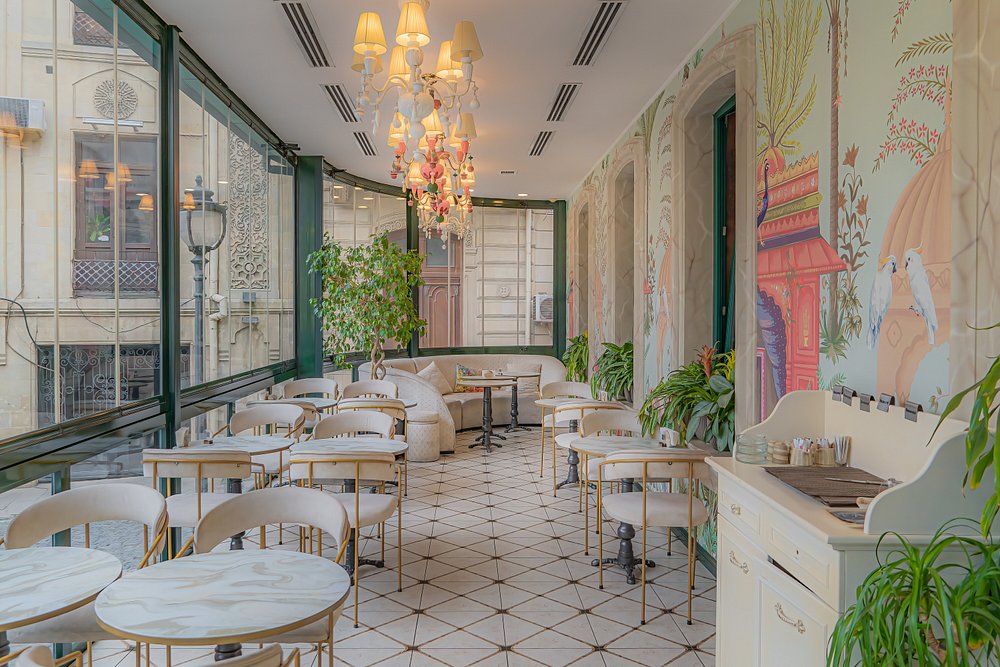
Six mornings at the same table: warm bread, local cheeses, honey, strong tea.
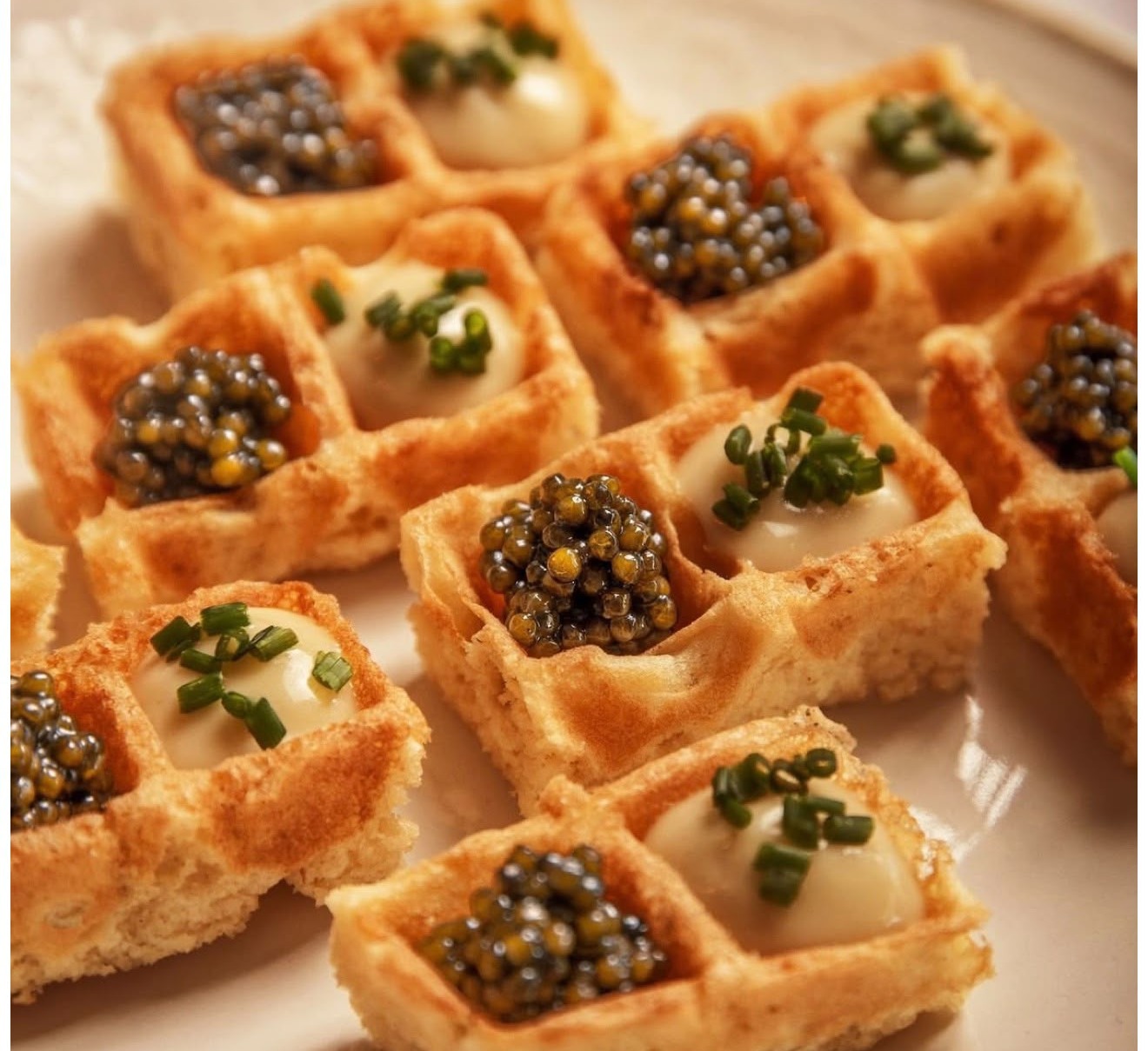
Caviar in the morning
A signature of a Caspian city, served the way it should be—simply, and early.
Azerbaijani breakfast traditions
Preserves, herbs, eggs cooked slowly, and conversation that runs long.
Premium local restaurants
Rooms the city chooses for itself, not the ones built for visitors.
Contemporary Baku dining
A younger generation reinterpreting a very old kitchen.
Regional recipes
Dishes that change with the region they come from.
Azerbaijani wine
Served with each of the six included dinners, with a dedicated wine tasting at Merci Baku as a separate hosted experience.
Beluga caviar
Served on six mornings at Merci Baku, and again with light food later in the week.
Hospitality and conversation
Dinner here is a social occasion, not a formal exercise.
Morning
A generous morning table in Baku
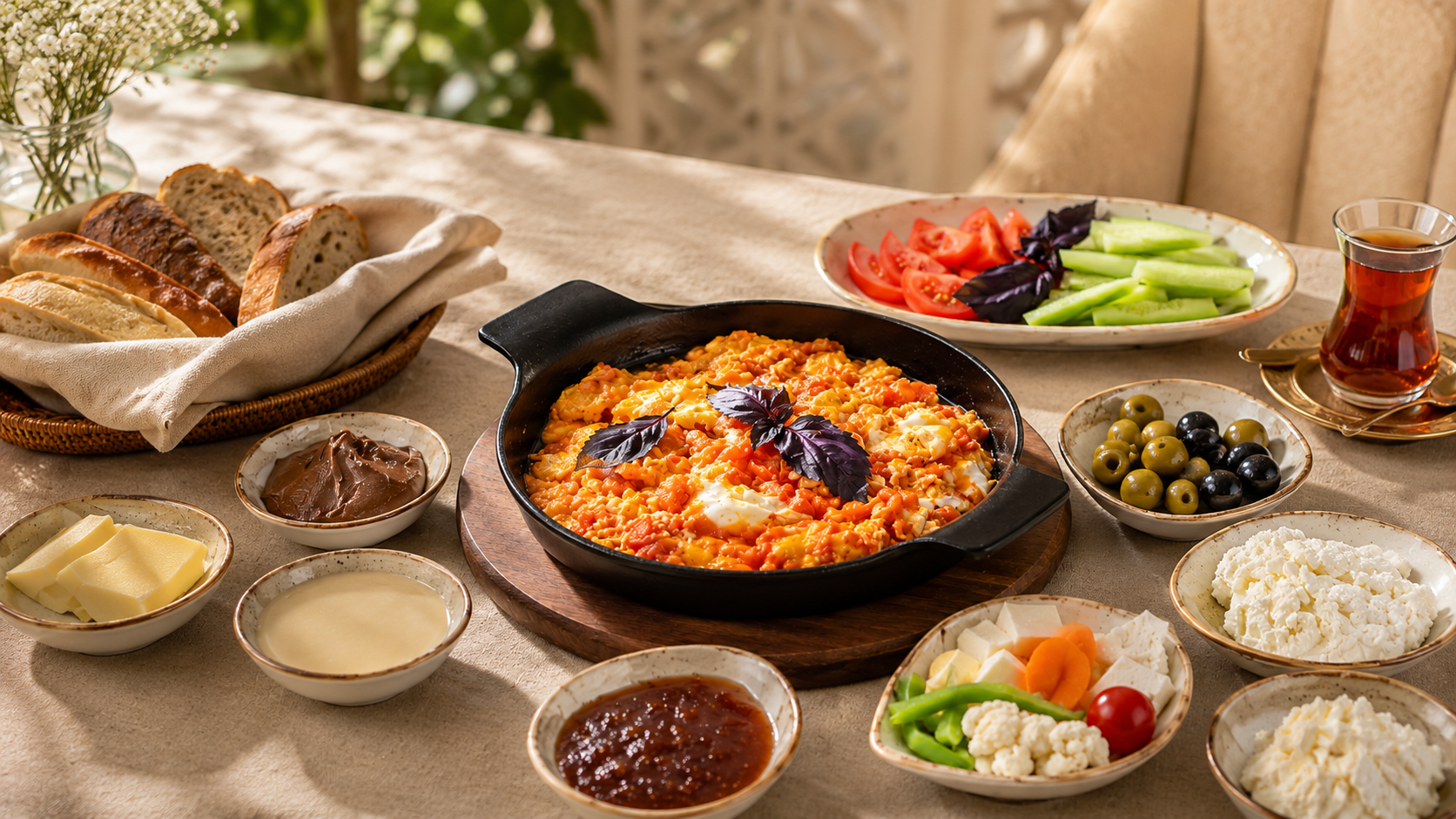
Six mornings begin at the same table: tomato and egg in the pan at the centre, and around it cheeses, preserves, butter, olives, cucumbers and tomatoes, warm bread, and tea in an armudu glass.
The detail
And then, something quieter
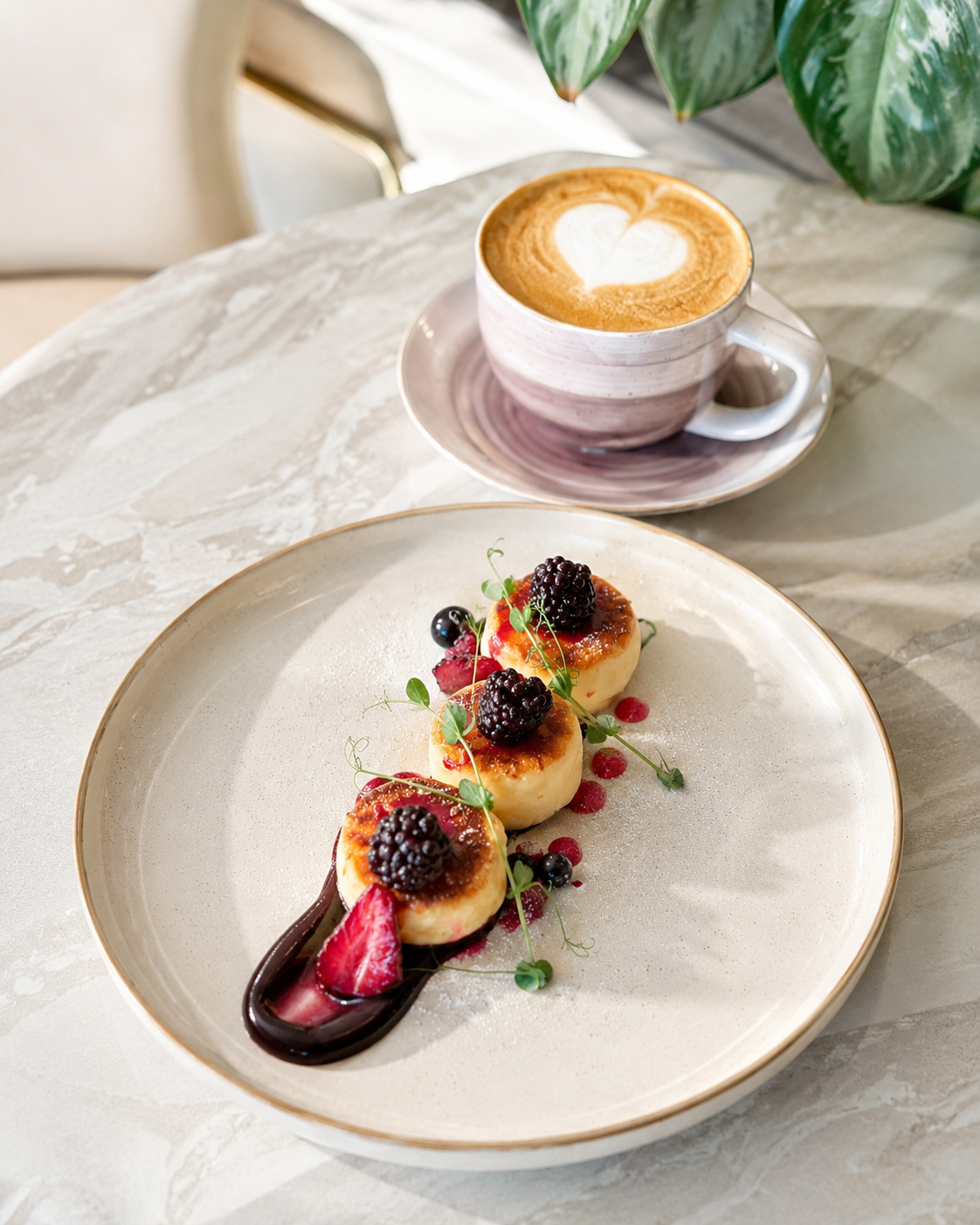
After the abundance of the table comes something smaller: cottage-cheese pancakes, berries picked that week, and coffee poured slowly on cool marble.
Abundance, then refinement. The morning at Merci Baku moves quietly between the two.
The larder
From the Caspian, and from the land
Azerbaijan's wealth begins with its ingredients. Almost everything on the table is local, and the menus follow what arrived that morning.
Caspian fish
Sea bass, kutum and sturgeon-family fish, eaten a few kilometres from the water they came out of.
Caviar
The signature of a Caspian city—served in the morning, without ceremony.
Fruit
Goychay pomegranates, figs, apricots, quince and summer melons.
Meat
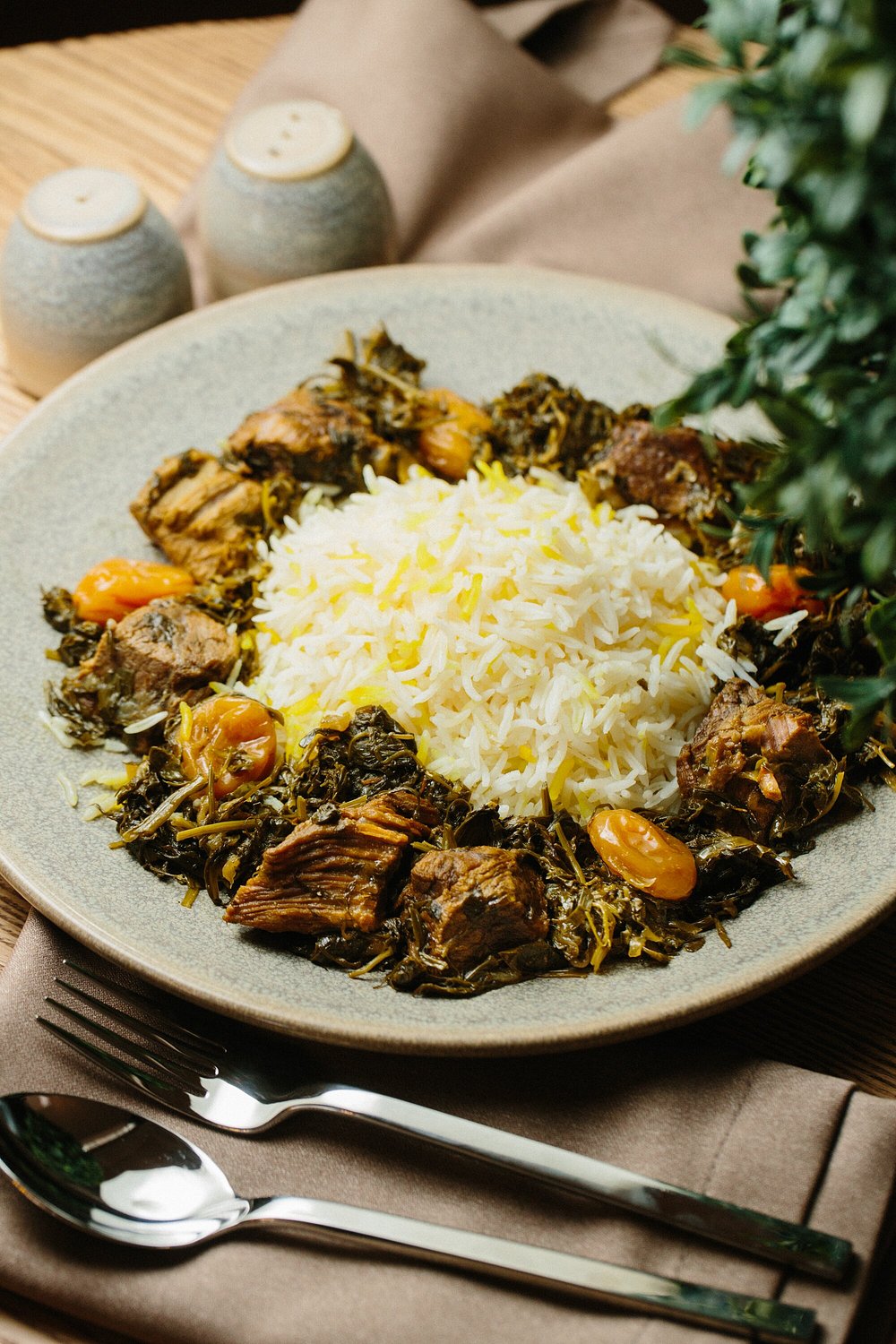
Mountain lamb, charcoal kebabs and slow-cooked local beef.
Vegetables and herbs
Bowls of tarragon, dill and cress on every table, all year.
Grains and pulses
Rice for plov cooked with pomegranate or chestnut, lentils and chickpeas.
Dairy
Sheep's cheese, house yoghurt and clarified butter at breakfast.
Honey, nuts and spice
Mountain honey, hazelnuts, walnuts, saffron and sumac.
Wine and tea
Wine from Azerbaijani vineyards, and strong tea poured continuously.
Seasonality
What is local, when it is best
Nothing is fixed. Spring brings herbs and young lamb; summer, fruit and tomatoes; autumn, pomegranates, chestnuts, mushrooms and the year's wine.
Rather than importing luxury, the week is built around local producers, fishermen and markets—the reason the food tastes of this place.

The host
Every table chosen by hand
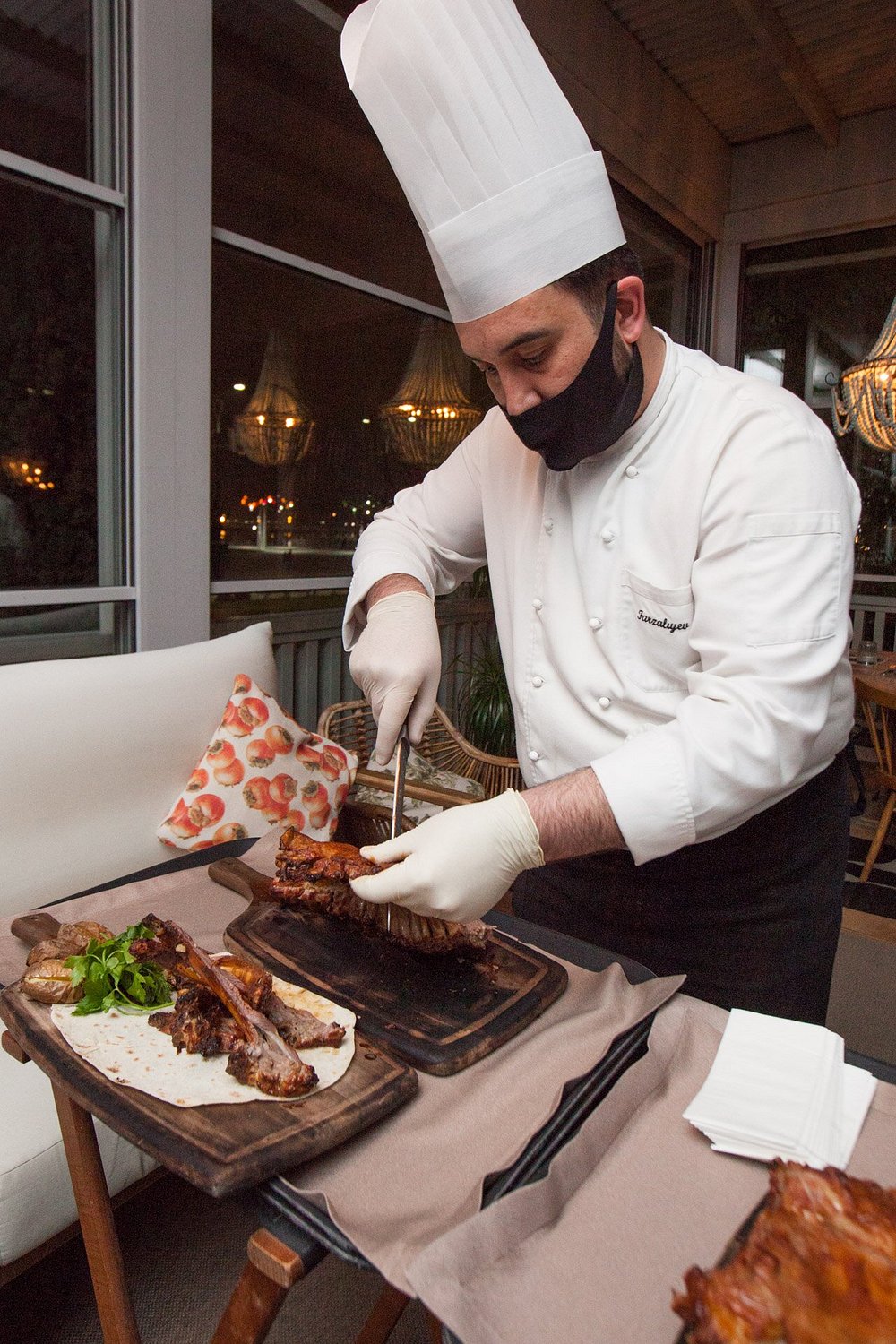
The six evenings are not a list of popular restaurants. They are rooms Kamila has returned to over years—places where the staff remember her name, the menu can be adjusted, and the evening feels like being received in a private home.
What matters more than formality is trust: the relationship that lets her shape each dinner around the guests at the table.
Six evenings
Six distinct evening experiences
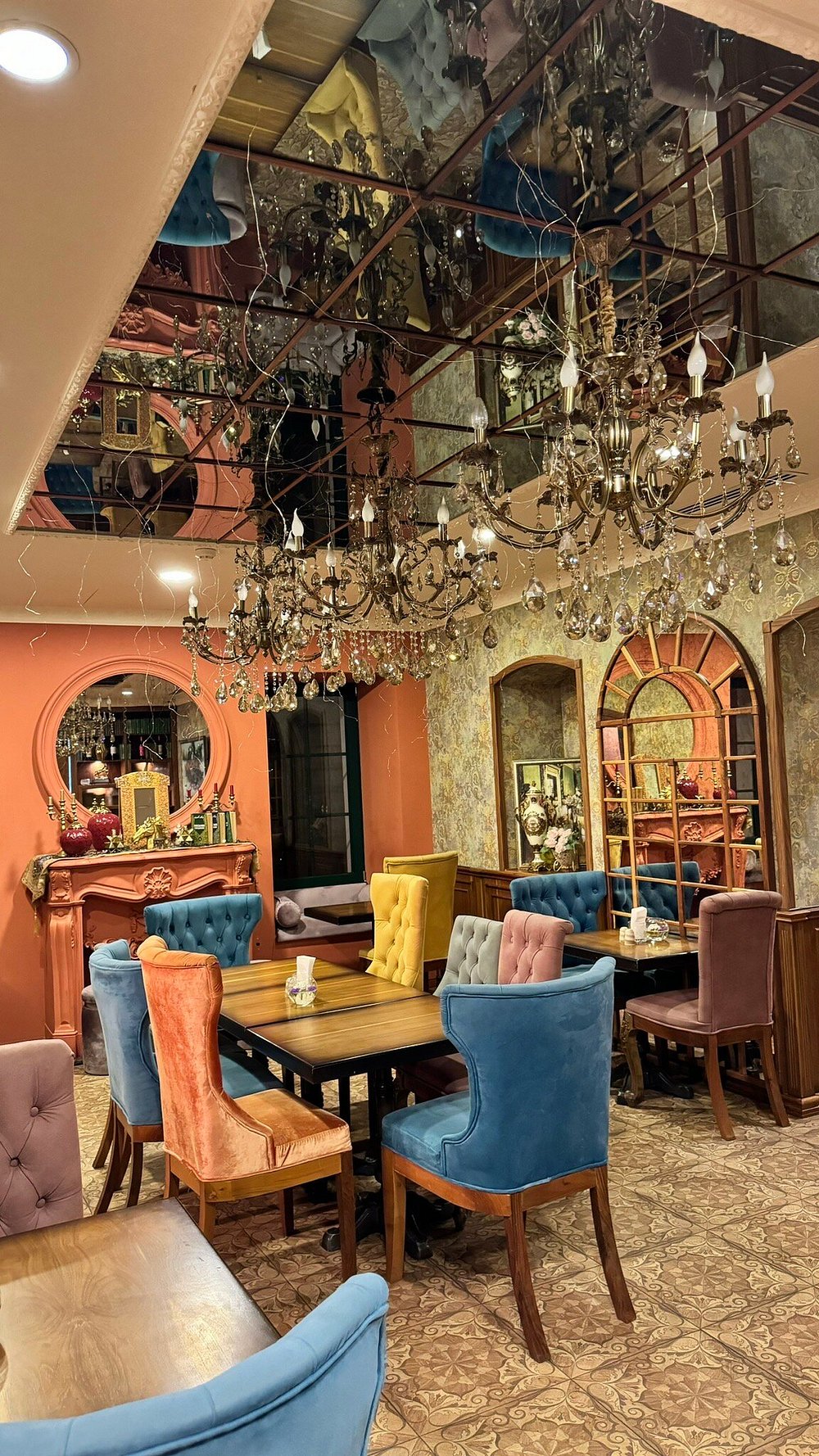
The six dinners are deliberately unalike: a stone courtyard, a contemporary room on the water, a family dining room, and a farewell table at the end of the week.
Not every meal is formal. The week should feel luxurious but warm, personal and genuinely enjoyable.
The Tea Experience
Five expressions of Azerbaijan.
One country. Five very different cups.
In Azerbaijan, tea is brewed patiently. It is given time to deepen, served slowly, and shared as part of hospitality.
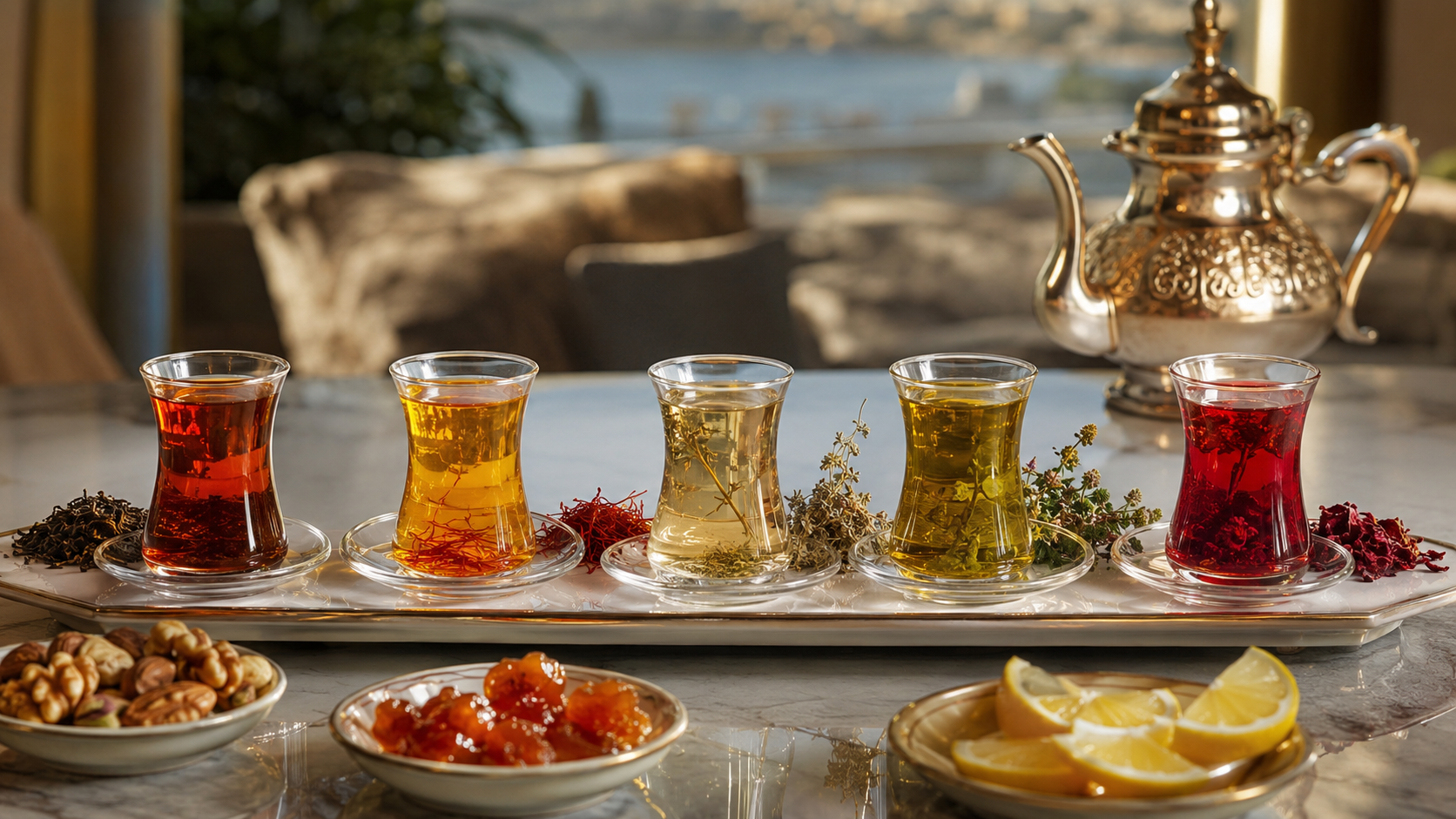
During the Merci Baku journey, mornings introduce a changing selection of Azerbaijani black teas and local herbal infusions — several expressions rather than one standard cup.
Taste them side by side.
- 01Lankaran Black TeaDeep · fragrant
- 02Saffron TeaWarm · aromatic
- 03Lemon ThymeBright · herbal
- 04Mountain HerbsWild · fragrant
- 05The Fifth CupA seasonal surprise
The selection changes with season and availability. The ritual remains the same: taste, compare, discover.
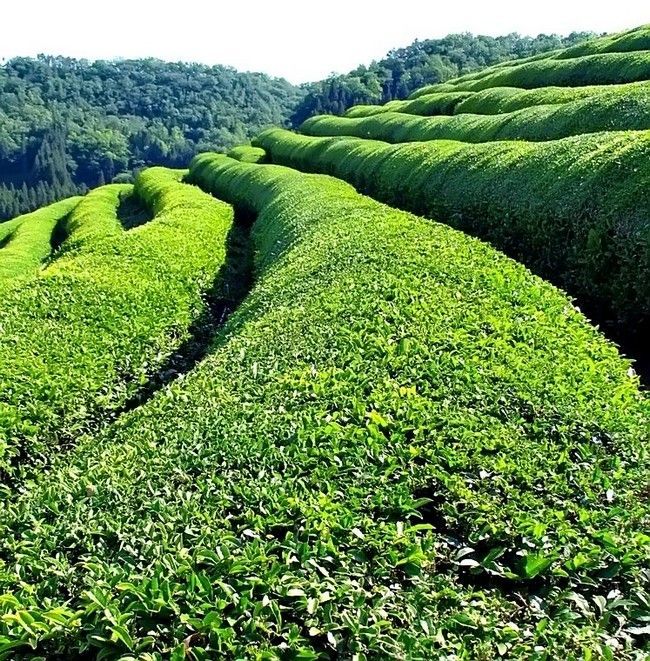
From Lankaran
Where Azerbaijani tea begins.
In Azerbaijan’s subtropical south, tea has been cultivated around Lankaran for generations.
Its deep black tea is the foundation of the tradition — and the starting point for the wider collection of teas and infusions we introduce throughout the journey.
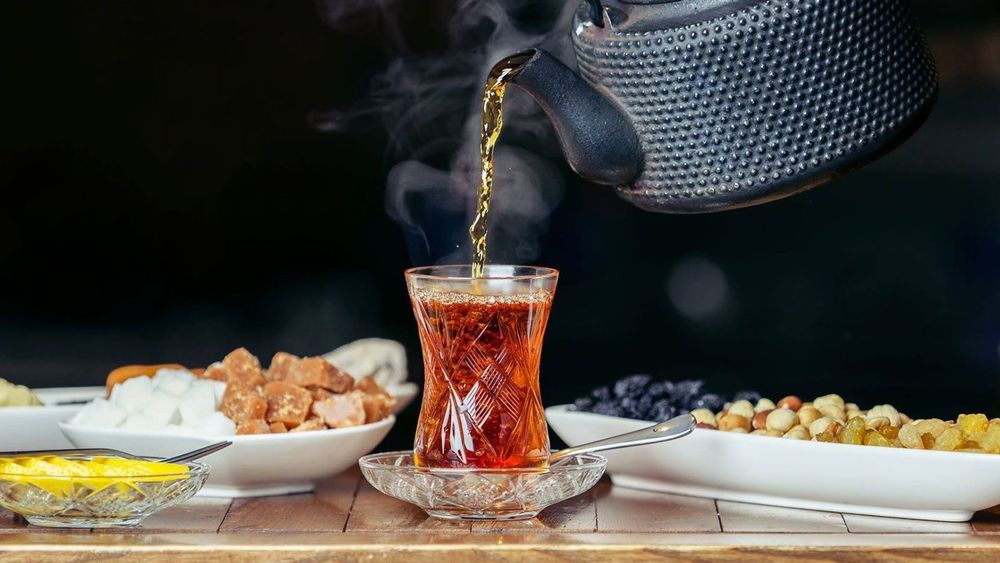
The Azerbaijani Way
Not just what we brew.
How we brew it.
Azerbaijani tea is allowed to develop patiently.
The brew is concentrated, the serving unhurried, and the strength adjusted at the table to suit the guest.
Alongside classic black tea, mornings can introduce thyme, mountain herbs, saffron and other local infusions.
A familiar respect for the ritual.
For Japanese guests, there is something immediately recognizable in the attention given to preparation, presentation, season and time around the cup.
The traditions are different. The respect for the ritual is not.
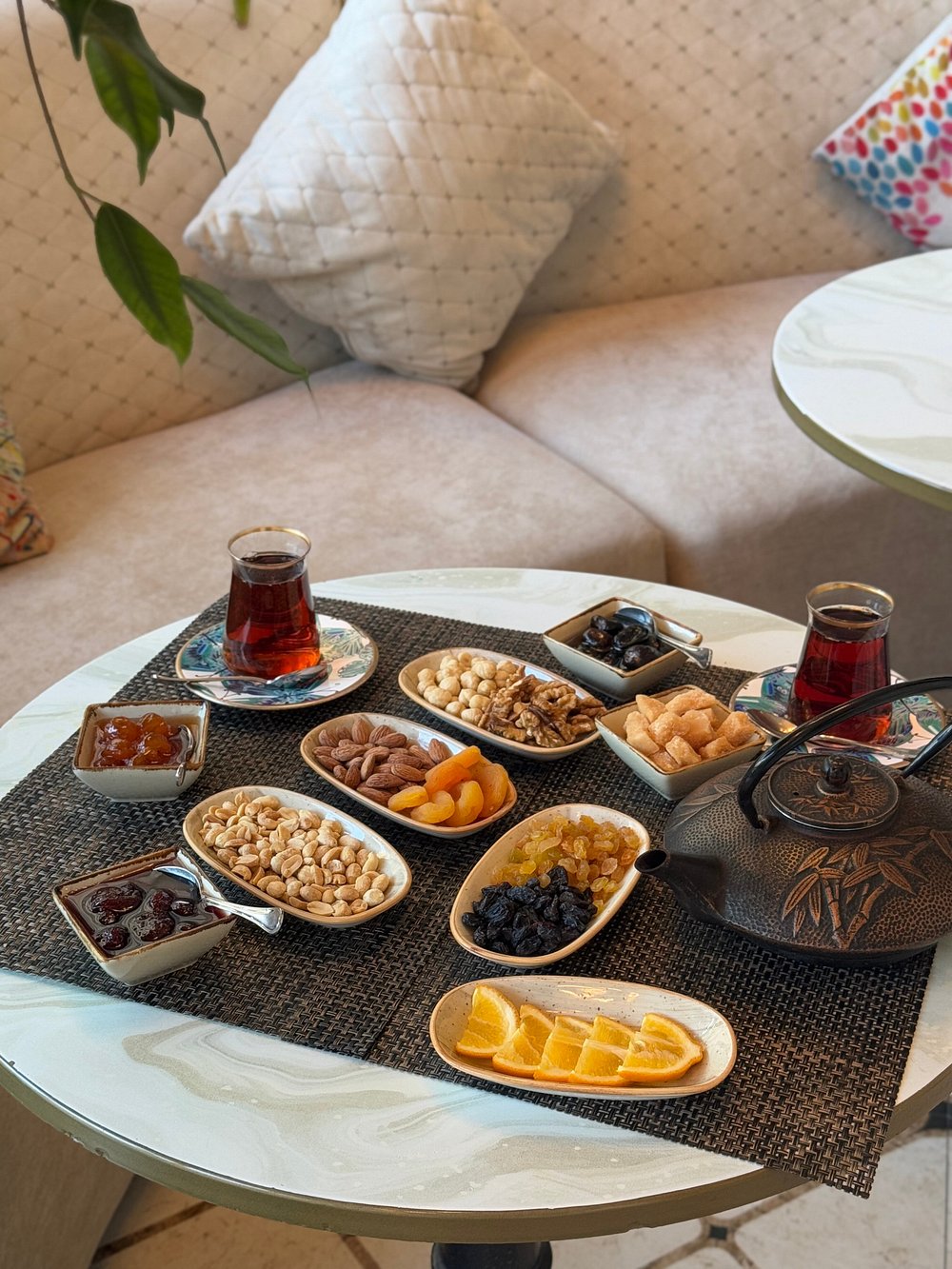
At the Tea Table
More than tea.
The cup arrives with the small pleasures that belong around it — preserves, honey, nuts, dried fruit and something sweet.
Together they turn tea from a drink into hospitality.
- White-cherry preserve
- Walnut preserve
- Local honey
- Nuts & dried fruit
- Seasonal sweets
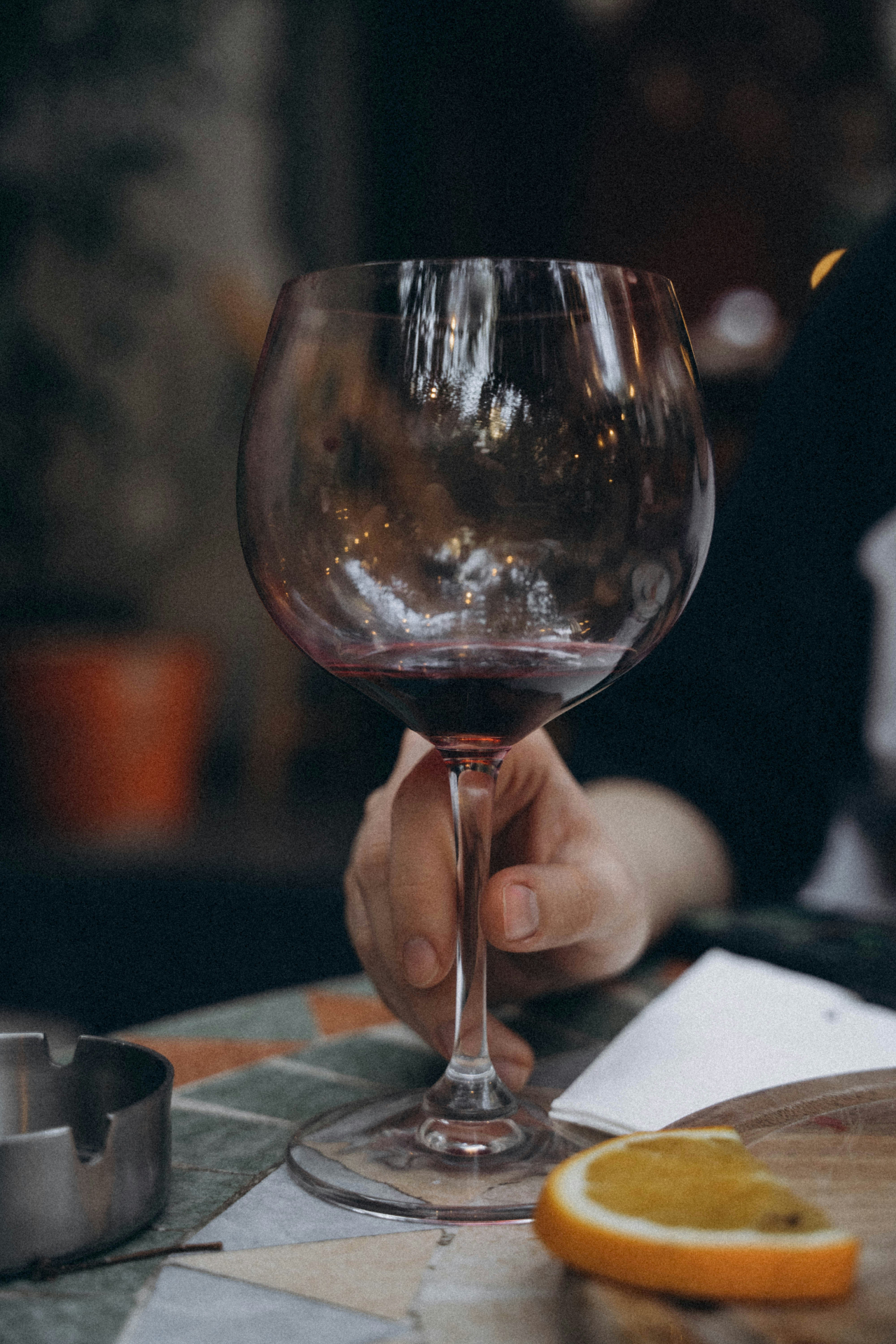
Wine
Local wine and hospitality
Azerbaijani wine accompanies all six included dinners, along with water, soft drinks and local beer. Spirits and premium imported alcohol are not included unless specifically confirmed.
A dedicated wine tasting at Merci Baku is also offered as a separate hosted experience during the week.