The Baku Journal / On the Table · 03
What to eat in Baku: four dishes, many ways to know a city.
Plov is more than saffron rice. A qutab is not simply a pancake. The details of the Azerbaijani table are where the most rewarding discoveries begin.
Start with Azerbaijani plov, qutab, dolma and tea served in an armudu glass. They represent different parts of the country's food culture—from slow-cooked celebratory rice to herb-filled flatbread and the ritual of hospitality. Not every dish is served at every restaurant or included in a specific tour.
A considered field guide
Know these four things at the table
An excellent meal begins with an informed question, not a checklist. The Tourism Board documents these foods and customs, but ingredients and methods vary by region, family and chef.
Plov · a ceremonial rice dish
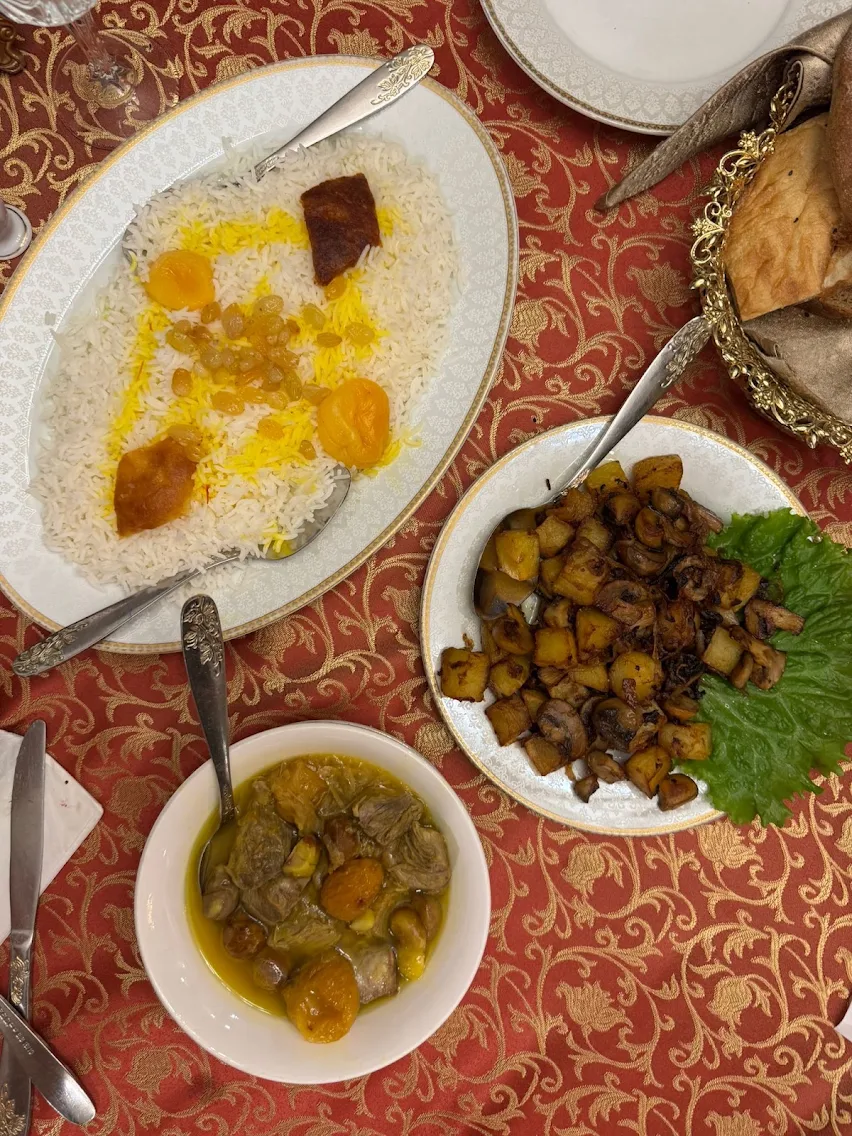
Azerbaijani plov is often built around carefully steamed rice, with saffron, butter, and a separately prepared accompaniment of meat, fruit or nuts. The Tourism Board describes many recognized variations rather than a single fixed recipe.
Ask about the accompaniment and cooking style, not only whether the restaurant serves rice.
Verify this fact ↗Qutab · filled flatbread
Thin dough folded around a filling and cooked on a hot surface; herbs and meat are among familiar approaches. The Azerbaijan Tourism Board has a dedicated gutab recipe explaining the use of herb fillings and the hot saj surface.
A qutab is a dish to discover independently, not a promise that it appears in every included dinner.
Verify this fact ↗Dolma · regional interpretations
In yarpaq dolmasi, vine leaves hold a mixture of meat, rice and herbs. Other regional variations use different wrappers and fillings; flavor and presentation change across Azerbaijan.
Dietary suitability depends on the actual filling and kitchen. Never assume a dish is vegetarian.
Verify this fact ↗Tea · part of hospitality
Tea in the narrow-waisted armudu glass is an occasion for conversation, often accompanied by preserves or sweets. It may be enjoyed before or after a meal.
A tea tradition is not the same as a guaranteed formal ceremony at every meal.
Verify this fact ↗I / The rice
Why plov is worth slowing down for
The Tourism Board identifies plov as a central Azerbaijani dish with numerous regional and household expressions. The pleasure is not simply in the rice. It is in how rice, saffron and a contrasting accompaniment are prepared and served. At the table, those choices can tell you something about the cook's tradition.
A thoughtful guest does not need to master the taxonomy before the first forkful. Instead, ask what is served alongside the rice, whether the preparation leans sweet, tart or savory, and which part of the dish the chef considers essential. Those questions open up the experience without turning dinner into an examination.
II / The smaller plate
Qutab rewards attention to simple things
Qutab is a filled flatbread, but the important difference is in what goes inside and how it arrives: warm, thin and often made to be shared. It can be a modest beginning to a meal rather than an elaborate centerpiece. The Azerbaijan Tourism Board documents herb-filled gutab, including its traditional preparation on a hot saj and its familiar accompaniments.
In a city full of restaurants, a familiar dish can vary considerably. That is a reason to remain curious, not to treat one version as the official one. The best approach is to ask the kitchen about today's preparation and order according to your own taste and dietary needs.
III / A wrapped tradition
Dolma is never just one recipe
Yarpaq dolmasi is made with grape leaves wrapped around a mixture that commonly includes meat, rice and fresh herbs. Even within Azerbaijan, the Tourism Board documents variations and regional cooking traditions. The same word can lead you to a different plate from one place to the next.
This is especially important for travelers with dietary requirements: grape leaves do not mean the filling is plant-based, and yogurt accompaniments may contain dairy. Let the restaurant confirm ingredients rather than relying on assumptions drawn from appearance.
Merci Baku
A week with more than one table
- Six mornings
Signature caviar breakfasts at the Merci Baku restaurant on Days Two through Seven.
- Six different evenings
Hosted dinners in six named restaurants, with Azerbaijani wine served each night.
- A different rhythm by day
Selected cultural experiences and free time rather than a continuous food tasting marathon.
- The final farewell
The published program includes a tea ritual as part of the last dinner's hospitality.
This describes the documented hosted week, not a guaranteed menu of plov, qutab or dolma at each dinner. Ingredients, dietary needs and specific menus should be confirmed with the operator and venues.
IV / Beyond the menu
Hospitality begins before the last course
Azerbaijani tea does not have to be an elaborate public performance. An armudu glass, something sweet and time to remain at the table can communicate the welcome as clearly as a multi-course dinner. The Tourism Board connects the tea ritual with family and social life, not just tourism.
That human rhythm is what makes Baku compelling to culinary travelers. A restaurant is not merely a list of dishes; it is a room, a pace, and an exchange between people. You can spend a week discovering different facets of the city's dining culture without claiming that every traditional dish will appear on a predetermined menu.
The people behind the table
The restaurant is real. The journey is newer.
Merci Baku Restaurant was founded by Kamila Verdiyeva and has an independent dining record. Its breakfast table anchors the journey's mornings; evenings move between the other named restaurants. The restaurant's independent recognition is not evidence that the new seven-day product has accumulated comparable tour reviews.

Tripadvisor Award Winner
Travelers’ Choice 2025 · Merci Baku Restaurant
Tripadvisor Travelers' Choice 2025 recognizes Merci Baku Restaurant, not the separate seven-day travel product.
Merci Baku · The Journey
One week. A city discovered through its people.
Six nights at Four Seasons Baku Hotel as the standard base; caviar mornings on Days Two through Seven, six hosted dinners, curated cultural time and space for independent exploration.
For travelers who prefer considered hospitality and cultural curiosity to the cheapest possible dining checklist.
The hotel is independently operated and each stay is confirmed individually. International flights and most lunches are excluded.
The standard hosted week
7 days · 6 nights · Four Seasons Baku Hotel
6 caviar breakfasts (Days 2–7), 6 hosted dinners, airport transfers, selected cultural experiences and a traditional hamam.
Published per adult · double occupancy
US$7,250
Published adult rate is for two adults sharing accommodation; exact menus and departure details are reviewed individually.
Explore journey datesAn inquiry about dates does not charge you. A written Agreement and invoice are issued before payment.
What a food-minded traveler should ask
What is the best-known traditional food in Baku?
Plov, dolma and qutab are recognizable starting points, but Azerbaijan's cuisine is much broader. The Tourism Board provides examples and recipes; no single dish describes every local table.
Is Azerbaijani food suitable for vegetarians?
Some dishes can be vegetable- or herb-centered, but many traditional recipes use meat, dairy or butter. Ask each restaurant to confirm ingredients and preparation; do not assume a dish is vegetarian from its name.
Will I try each of these dishes on the Merci Baku journey?
Not necessarily. The standard journey includes six hosted dinners at different restaurants and six caviar breakfasts, but it does not guarantee this article's individual dishes on each menu.
Is this a restaurant list or a one-day food tour?
No. This is an independent food-culture guide. Merci Baku's separate paid product is a seven-day, six-night hosted culinary journey, described on its journey page.
Sources and further reading
Azerbaijan Tourism Board — Azerbaijani plov and its preparation ↗
Azerbaijan Tourism Board — Yarpaq dolmasi ↗
Azerbaijan Tourism Board — Gutab with herbs recipe and preparation ↗
Azerbaijan Tourism Board — Lankaran tea and the armudu glass ↗
Sources reviewed 17 October 2026. Menu items, opening hours, group availability and individual arrangements may change.