The Baku Journal / Tea & Welcome · 06
Azerbaijani tea: the glass is small. The welcome is not.
A pear-shaped armudu glass, something sweet, and a conversation allowed to continue. In Baku, tea is not merely what arrives after dinner; it is a language of welcome.
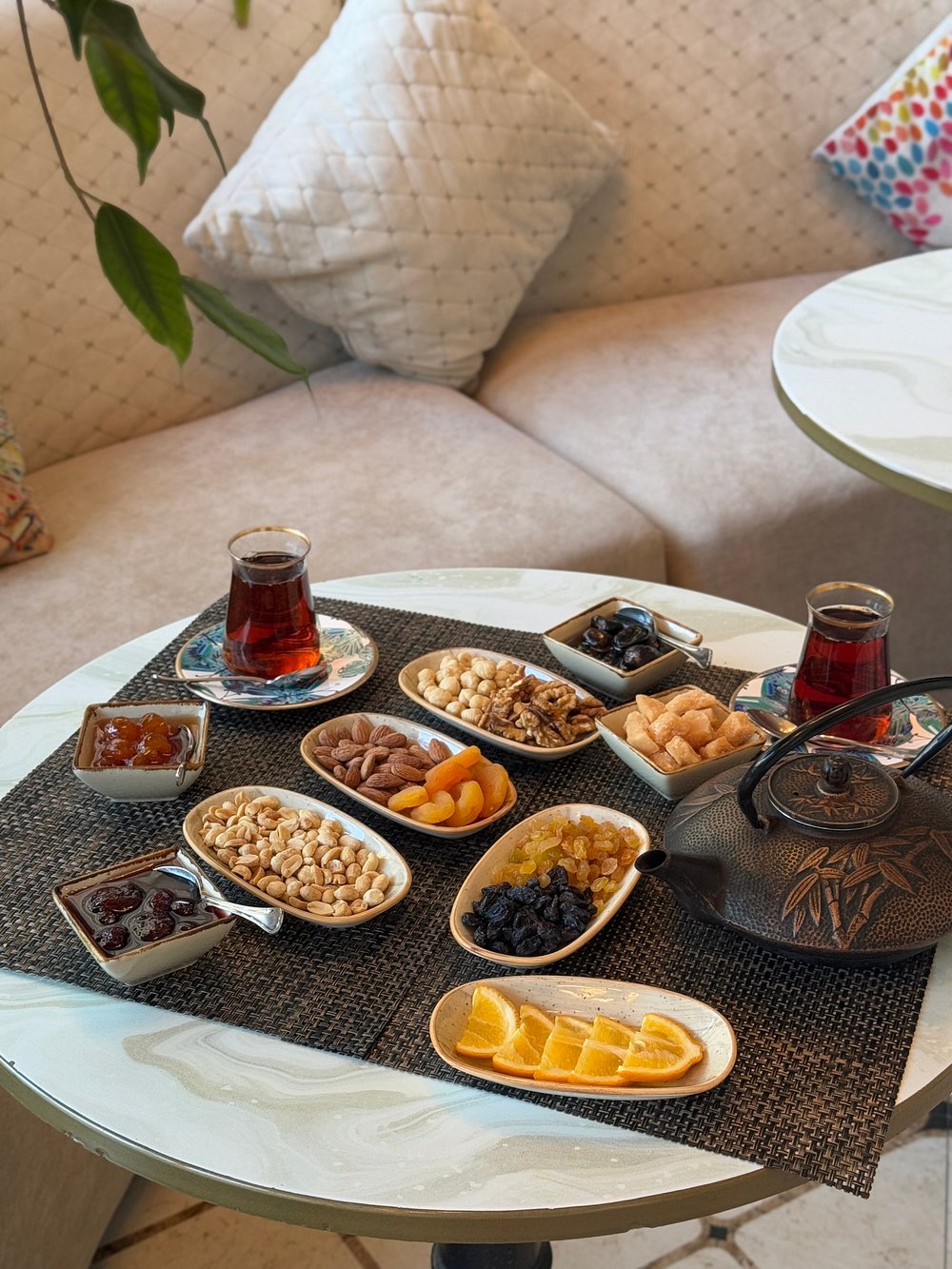
Tea in Azerbaijan is traditionally served hot in a pear-shaped glass called an armudu, often with sugar, lemon, jams or sweets. The culture of Çay, shared by Azerbaijan and Türkiye, was inscribed on UNESCO's Intangible Cultural Heritage list in 2022. The recognition is for a living cultural practice—not for any particular restaurant or travel package.
A considered field guide
Four details that change how you see the table
The most memorable hospitality often appears in small gestures. UNESCO and Azerbaijan's tourism authorities describe several elements of the tradition.
Armudu · the pear-shaped glass
The narrowed middle makes the glass immediately recognizable. Azerbaijan Tourism Board explains that the shape helps tea remain warm and invites guests to sip slowly.
An armudu glass is a vessel and cultural cue, not a certification of tea origin.
Verify this fact ↗Lankaran · a tea-growing region
Lankaran in the south of Azerbaijan is documented by the Tourism Board as a regional center of tea cultivation, with a subtropical climate and its own brewing practices.
A Lankaran history does not mean every glass served in Baku comes from Lankaran fields.
Verify this fact ↗Jam, sugar and sweets
UNESCO describes tea accompanied by sweets, sugar, lemon, jams and dried fruit. The Tourism Board discusses particular jam-making traditions, including walnut and white cherry.
Side dishes vary; a named jam or dessert is not automatically included at every tea service.
Verify this fact ↗Hospitality and conversation
UNESCO recognizes tea's role in welcoming people and maintaining social ties. It is part of ordinary life as well as celebrations.
A shared cultural tradition belongs to communities, not exclusively to Merci Baku.
Verify this fact ↗I / A ritual without a stage
Tea belongs to everyday life
UNESCO's inscription of the culture of Çay in 2022 recognizes the practice across Azerbaijan and Türkiye as an expression of identity, hospitality and social interaction. It is an important distinction: the tradition was not invented for visitors, nor does a heritage inscription confer exclusive ownership on a hospitality company.
Tea may be offered when someone arrives, when a conversation begins, or when a gathering lingers. An attentive traveler can experience the meaning without needing to be presented with a staged show. A small, hot glass may be the most natural moment of welcome in the day.
II / The shape of the glass
Why the armudu looks the way it does
The armudu's familiar pear-shaped silhouette is a signal of the culture before the first sip. Azerbaijan's Tourism Board notes how its form helps preserve warmth. UNESCO describes tea served fresh and hot in pear-shaped cups made of different materials.
You do not need elaborate instructions to enjoy it. A guest can let the glass cool slightly, pay attention to the aroma, and share a conversation. The ritual is not defined by finishing tea quickly, memorizing a script, or demonstrating expertise to a host.
III / South of the capital
Lankaran brings a landscape to the conversation
The Tourism Board identifies Lankaran, in Azerbaijan's south, with tea cultivation and distinct local preparations. That geography matters: tea has a regional agricultural story as well as a social one. Baku's dining rooms are a place to encounter the culture, but they are not tea plantations.
An estate or tea-farm visit would require travel and arrangements of its own. The Merci Baku city journey does not automatically include trips to Lankaran, producer meetings, or a guarantee of a single farm's leaves.
Merci Baku
Two moments of welcome in the published week
- Arrival day
Kamila Verdiyeva, or a senior host if her schedule prevents attendance, welcomes travelers over Azerbaijani tea in the standard reference itinerary.
- Mornings
The six scheduled caviar breakfasts take place at Merci Baku Restaurant from Day Two to Day Seven.
- Throughout the week
The experience includes six hosted dinners and opportunities to experience the city's different dining rooms.
- Farewell evening
The Day Six reference program mentions a çay dəsgahı tea ceremony at the closing dinner.
These are published reference-program moments, with any actual schedule and host arrangements confirmed per departure. A formal tea performance, a particular glass, or a specific regional leaf is not guaranteed daily.
IV / Beside the cup
Something sweet can carry the whole memory
UNESCO describes sweets, sugar, lemon, jams and dried fruit as familiar accompaniments to tea. Azerbaijan's Tourism Board records the craft of preserving fruit, including white cherries and walnuts. There is no single obligatory arrangement of the table, and different households make different choices.
In a travel week centered on dining and human contact, these details are not an incidental extra. A cup of tea can announce arrival, mark the end of an evening, or leave a guest with a quiet memory of being welcomed. That emotional meaning is more valuable than a claim of exclusivity.
The people behind the table
A living cultural tradition, and a restaurant with its own identity.
The UNESCO tea-culture recognition belongs to the communities of Azerbaijan and Türkiye. Merci Baku Restaurant is a separate hospitality business whose founder, dining rooms and restaurant reviews stand on their own.

Tripadvisor Award Winner
Travelers’ Choice 2025 · Merci Baku Restaurant
Tripadvisor Travelers' Choice 2025 belongs to Merci Baku Restaurant only. UNESCO's 2022 recognition concerns shared tea culture, not the restaurant or the seven-day tour.
Merci Baku · The Journey
One week. A city discovered through its people.
Six nights at Four Seasons Baku Hotel as the standard base; caviar mornings on Days Two through Seven, six hosted dinners, curated cultural time and space for independent exploration.
For travelers who value the human character of hospitality as much as grand hotels and remarkable food.
The hotel is independently operated and each stay is confirmed individually. International flights and most lunches are excluded.
The standard hosted week
7 days · 6 nights · Four Seasons Baku Hotel
6 caviar breakfasts (Days 2–7), 6 hosted dinners, airport transfers, selected cultural experiences and a traditional hamam.
Published per adult · double occupancy
US$7,250
Adult rate is based on two sharing the standard six-night accommodation; specific hospitality details follow the confirmed program.
Explore journey datesAn inquiry about dates does not charge you. A written Agreement and invoice are issued before payment.
Before your first armudu glass
What is an armudu glass?
It is the pear-shaped vessel commonly used to serve tea in Azerbaijan. The Tourism Board describes its form as helping keep the drink warm.
Is Azerbaijani tea culture recognized by UNESCO?
Yes. The shared culture of Çay in Azerbaijan and Türkiye was inscribed on UNESCO's Representative List of Intangible Cultural Heritage in 2022. This does not certify a specific restaurant or tour.
Is there a tea plantation in Baku?
Lankaran, farther south, is a documented tea-growing center. A visit to a plantation is a separate journey and not a standard inclusion of Merci Baku's city stay.
Does the Merci Baku week include a tea ceremony every day?
No such daily guarantee is stated. The published program includes arrival tea hospitality and a farewell tea ritual; actual timing and service are confirmed for the departure.
UNESCO and official tourism references
UNESCO Intangible Cultural Heritage — Culture of Çay (Azerbaijan and Türkiye, 2022) ↗
Azerbaijan Tourism Board — Lankaran tea and the armudu glass ↗
Azerbaijan Tourism Board — The place of homemade jams in the tea ceremony ↗
Sources reviewed 17 October 2026. Tea accompaniment, individual hosts and itinerary details are confirmed for each departure.