Azerbaijan Journal
Discover the Azerbaijan you saw in VIVANTSheki and Baku, beyond the screen
Here in Azerbaijan, it feels a little extraordinary to see viewers in Japan watching VIVANT and talking about Sheki and Baku.
And it makes me very happy.
Because places that have always been part of our everyday lives are being discovered by so many people far away in Japan.
Azerbaijan was also a filming location for the 2026 production of VIVANT.
Places filled with suspense on screen return to everyday Azerbaijan when the cameras stop.
Mountain air. Old stone walls. Voices in the market. People drinking tea. Families gathered around the dinner table. And the breeze coming in from the Caspian Sea.
I cannot solve the mysteries of VIVANT here.
Instead, I would like to introduce you to a little of the real Azerbaijan beyond the screen.
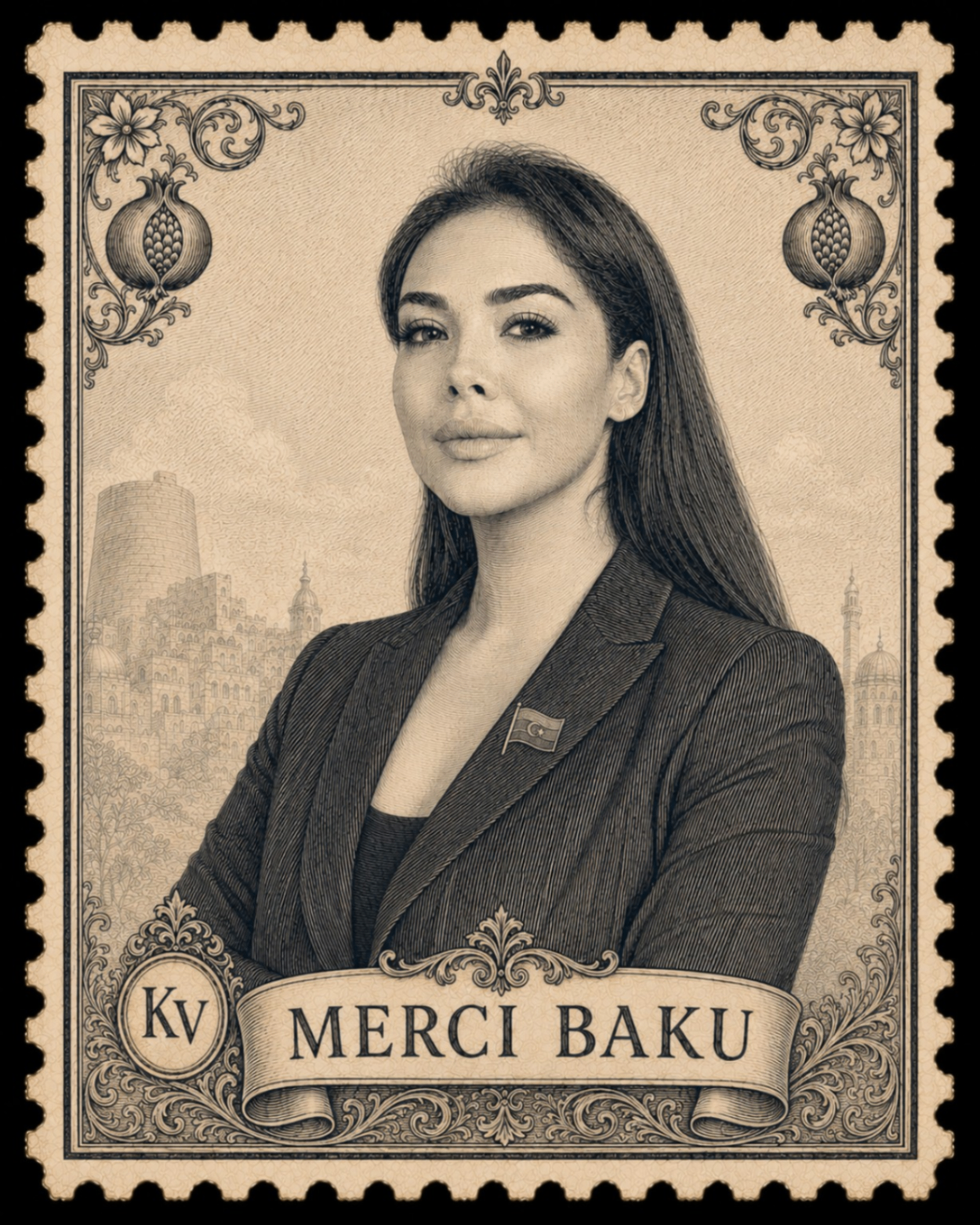
Kamila Verdiyeva
Merci Baku
Sheki — a Silk Road town beyond the screen
Some of you may have heard the name Sheki for the first time while watching VIVANT.
The real Sheki is a green, peaceful historic town at the foot of the Caucasus Mountains.
Once an important stop on the trading routes between East and West, it still has the caravanserais that welcomed merchants and travellers, traditional houses, cobbled streets and a living craft culture.
The Historic Centre of Sheki with the Khan’s Palace is also a UNESCO World Heritage Site.
Travellers once crossed the mountains, arrived in an unfamiliar town, shared a meal, drank tea and stayed the night.
For centuries, Sheki has been a town that welcomes travellers.
“Is Sheki really such a mysterious place?”
To answer that directly:
Of course not.
It is a peaceful historic town surrounded by mountains.
But lately, reading the theories that viewers in Japan share about VIVANT, even we Azerbaijanis sometimes find ourselves thinking:
“I see… was our country really that mysterious?”
It has certainly given us a new perspective.
Even buildings we used to walk past without a second thought have started to look a little suspicious.
VIVANT is partly to blame for that.
Baku — another city beyond the old walls
Travelling from Sheki to Baku, the scenery changes dramatically.
Baku’s Old City: Icherisheher.
Narrow cobbled lanes. Old hamams. Caravanserais. The Palace of the Shirvanshahs.
It is a city of stone, shaped by centuries of life.
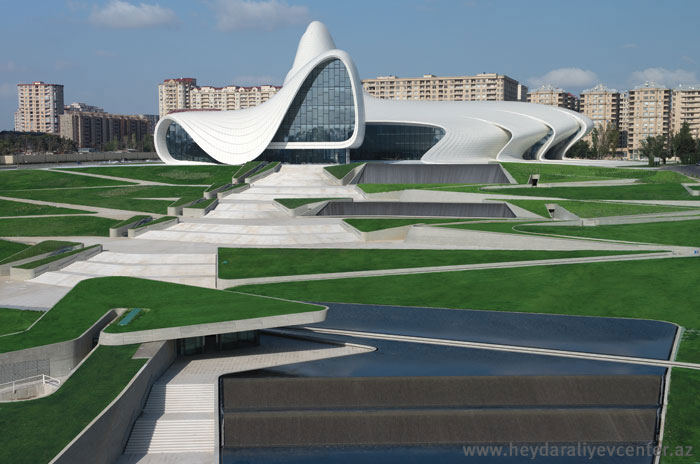
Yet a short walk beyond the walls brings you to contemporary architecture along the Caspian Sea.
Old Baku and new Baku.
The two live side by side, with scarcely a boundary between them.
First-time visitors often tell me:
“It was completely different from the Azerbaijan I had imagined.”
I hear that quite often.
Perhaps that is part of what makes this city so interesting.
You come for a filming location and find yourself falling for a country
Visiting a filming location has a pleasure of its own, a little different from ordinary sightseeing.
“So this is where that scene took place.”
There is that moment of recognition.
But I find what happens afterwards even more interesting.
The town that was a backdrop on television is a place where people really live.
They bake bread there, drink tea, make wine, listen to music, and have dinner with their families.
And, almost without noticing,
“a trip to see a filming location”
becomes “a journey into Azerbaijan”
and a chance to get to know the country itself.
When “perhaps I will visit one day” begins to turn into “I really would like to go”,
I invite you to explore a little further.
From Japan to Azerbaijan
Japanese passport holders should check current visa requirements, including the eligibility and validity dates of any temporary visa exemption, before arranging travel to Azerbaijan.
Before travelling, always check the latest official information from the Embassy of Japan in Azerbaijan or the Azerbaijani government.
Entry requirements may change.
And when you really feel like coming
I have welcomed guests at Merci Baku in Baku’s Old City since 2011.
There is a saying in Azerbaijan:
“A guest is a gift from God.”
It is a belief that shapes the way we welcome people.
For many years, friends have asked me:
“Someone important to us is coming to Baku. Where should we take them?”
Whenever they ask, I find myself thinking:
Which table would suit them? Who would I like them to meet? What kind of evening would I like them to have?
Those are the details I have always cared about.
Merci Baku’s seven-day journey did not begin with the idea of creating a tour.
For the guests who travel to us from Japan,
I want the memory to be more than “I saw Baku.”
I want it to be:
“I spent time in Baku.”
That is how I hope they will feel when they return home.
That wish was where the journey began.
So, should VIVANT leave you curious about the Azerbaijan beyond the screen,
come and see it for yourself one day.
Let us compare the Azerbaijan on screen with the real country,
and discover how the two come together,
in person.
Kamila Verdiyeva
President, Merci Baku
Seven days spent in Baku
Six nights at Four Seasons Baku Hotel. Mornings that begin at Merci Baku. And Baku, with us here to welcome you.
For travel advisers and the media
Merci Baku welcomes partnerships with Japanese travel companies, requests for local information about Azerbaijan and media enquiries.
Please contact Merci Baku to discuss an interview with Kamila Verdiyeva, local information and photography, or a travel programme.
Author
Kamila Verdiyeva
Kamila has welcomed guests at Merci Baku in Baku’s Old City since 2011. After years of helping others decide how to welcome their own guests to Baku, she drew on that experience to create Merci Baku’s seven-day journey.
Sources and official information
VIVANT is a TBS television production. Merci Baku is not affiliated with, sponsored by, or officially connected to TBS or the programme’s production team. This page provides independent local information for visitors to Azerbaijan.